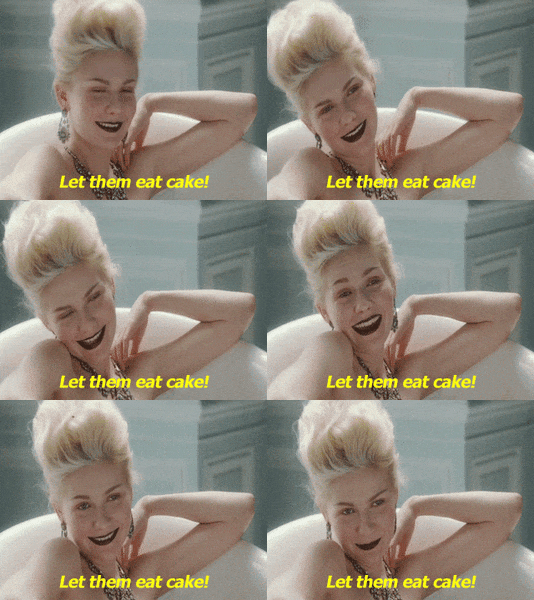
In the French Revolution, the First and Second Estate (clergy and nobility, respectively) lorded over the Third Estate (commoners). They looked down upon them for not being able to feed themselves, even though it was the economic system, poor decisions, and corruption of the First and Second Estate that led to the crisis. What made matters worse was that the commoners were squeezed even more by outrageous taxes to try to solve the economic problems the clergy and nobility created.
That’s my layman’s understanding of what precipitated the French Revolution.
Fortunately we have history to look back upon so we never repeat those same mistakes.
But can you imagine judging someone for being poor under those conditions? For begging or stealing bread so they wouldn’t starve?
And imagine if a rebel of that era pointed out the faults of the economic system and the abuses of the clergy and nobility that caused such petty crimes of begging or stealing bread.
And imagine if that rebel pointed out the callousness and hypocrisy of anyone who judged someone who did what they had to to not starve, anyone who didn't hold the clergy and nobility accountable for creating the situation.
Should such a rebel be scorned for putting a spotlight on the abuses and corruption of the clergy and nobility? Did that rebel shame those who were starving and forced to beg or steal bread? Absolutely not. Starving beggars and bread thieves are not the issue and have absolutely nothing to be ashamed of. A person will find whatever way they must to eat, to survive. Anyone would, or else die. Anyone who would judge is a blind hypocrite, and should switch places for a day. They are the ones the rebel is shining the spotlight on. The situation that requires changing is what the rebel is shining the spotlight on, not to fault starving beggars or bread thieves.
If you cannot see that, or if you still only look down upon beggars and bread thieves, woe to you!
The truth will set everyone free, including me, eventually. Don't fear it. Don't hate it. Don't run from it. Just accept it for what it is.
And before we get into the Freedom Fries debate, it’s important to remember the French saved our butts in our American Revolution before we saved theirs in WWII (like it even matters who saved who, or first). If it weren't for them, we’d be speaking... English still, but British English... and with stamp and tea taxes... and funny judges wigs... and comparing the weight of women to ducks to see if they were witches... if it weren’t for the French.
Can't believe I'm even having this debate, preemptively no less... But here we are.
Addendum: Admittedly, many members of the First and Second Estates, to varying degrees, were products of their own environment as much as anyone else. I mean, who wouldn't be at least tempted to live in a bubble of extravagant luxury while others grovelled for scraps? That does not excuse the behavior. Understanding and excusing are completely different. Understanding leads to effective, fair change. Excusing allows the status quo to continue or allows people to escape without learning.
(I'm reminded here of the humble, servant leader who lives modestly.)
But when power switches hands, there is often a desire to throw the rascals out and teach them all a lesson they'll never forget! See the French Revolution Reign of Terror. This is why understanding and moderation are so important, why balance is so important.
Even if the First and Second Estate recognized the need for change, many probably rightly feared a Reign of Terror that came to be true. But great political change does not require this. A slow transition can happen where perhaps wrongs are righted, in moderation, and justly (not too harsh, understanding they too were trapped by their circumstances; but not too easy, because many suffered under their power). But no heads need to be rolled.

No comments:
Post a Comment